

ARTICLE
5 Types of Water Tanks: Learn About Their Types and Functions!
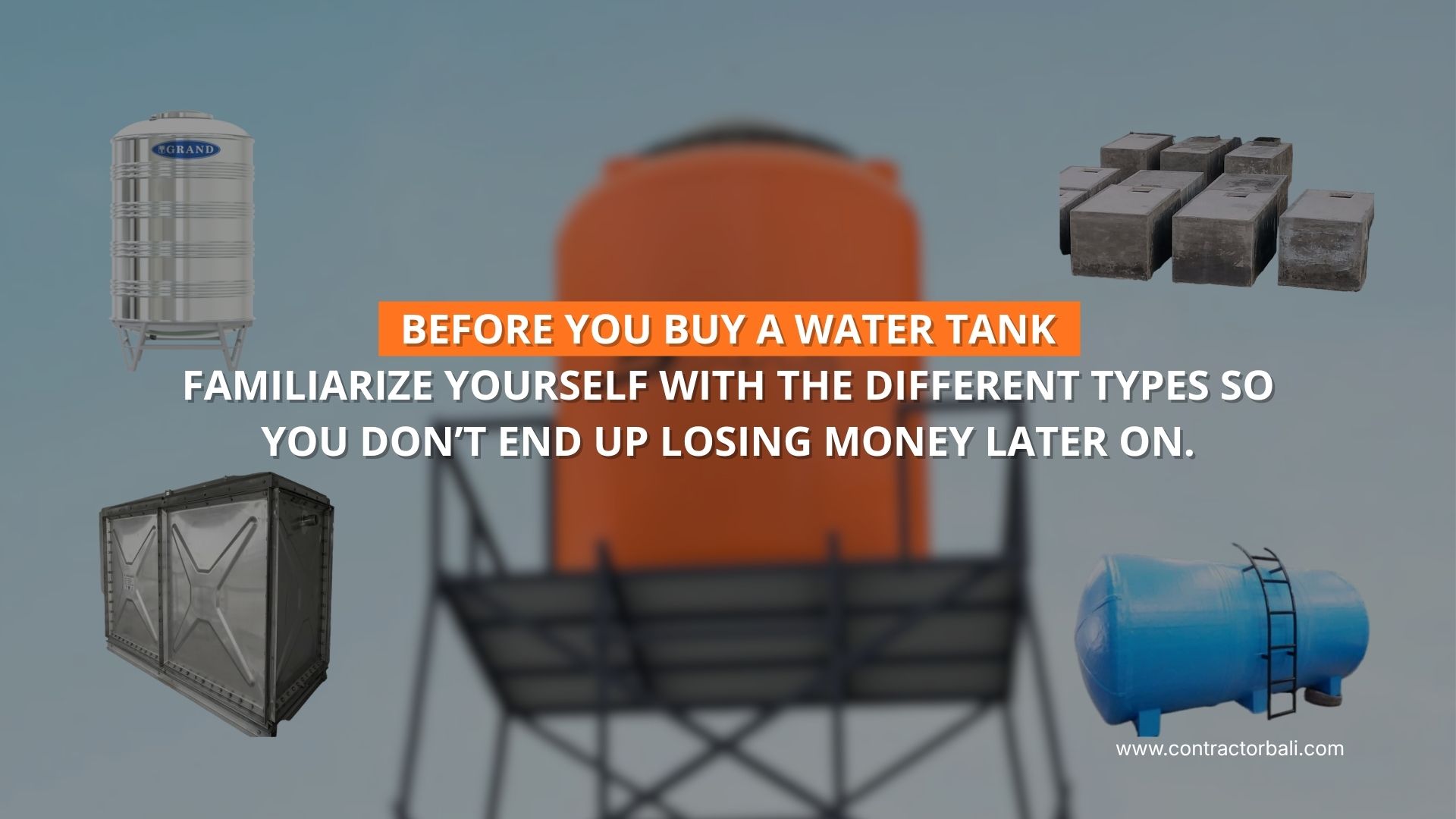
A water tank is a container for storing clean water that is used to hold water from a drilled well or other water sources.
Water tanks serve as water reserves, maintain water quality, and help stabilize the water supply. There are various types of water tanks, each with its own function. Water tanks can be used in a variety of settings, such as residential, commercial, or industrial. The following are the types of water tanks and their descriptions.
1. Plastic Water Tank (Polyethylene)

Plastic water tank, or HDPE (High-Density Polyethylene) tanks, are made of a plastic material known for its strength and high density. This material is resistant to corrosion, weather, and various chemicals, making plastic water tank ideal for storing clean water. These tanks are widely used and come in a variety of sizes and colors. Maintenance is simple they only need to be drained once a year.
Advantages | Disadvantage |
|---|---|
+ Relatively inexpensive + Rust- and corrosion-resistant + Easy to install and move + Wide range of sizes available | – Less resistant to hard impacts – May develop mold if the material quality is poor – Has a shorter service life than metal |
2. Stainless Steel Water Tank

A stainless steel water tank is a water storage container made of stainless steel, a material known for its corrosion resistance and rust prevention. Stainless steel has a protective layer that prevents oxidation, making these tanks durable and long lasting.
Stainless steel is known for being more hygienic and easy to clean due to its smooth, non porous surface. This type of tank also features an elegant and modern design that complements a variety of architectural styles. Additionally, stainless steel water tanks are available in large sizes or capacities to meet industrial needs.
Advantages | Disadvantage |
|---|---|
+ Very strong and durable + Rust-resistant + More hygienic (water is less likely to become contaminated) | – Expensive – Heavier – Can absorb heat (making the water warmer) |
3. Fiber (Fiberglass) Water Tank

Fiberglass water tank are water storage containers made of fiberglass and resin. These tanks are typically used for temporary storage before the water is distributed to homes, buildings, or industrial facilities. This type of tank is quite sturdy, rust resistant, mold resistant, bacteria resistant, and easy to move. Fiberglass tanks are well suited for industrial and commercial use due to their large capacity.
Advantages | Disadvantage |
|---|---|
+ Strong and durable + Available in large capacities + Resistant to extreme weather | – It’s quite expensive – It’s harder to maintain – If it cracks, it’s not easy to repair |
4. Concrete Water Tank

Concrete water tank are water storage structures designed to hold large volumes of water. These tank are constructed using high quality materials such as cement, aggregate, and additives. This type of tank can be built underground, above ground, or as a tower, depending on the needs and available land.
Advantages | Disadvantage |
|---|---|
+ Very strong and durable + Large capacity + Not affected by sunlight | – Cannot be moved – High initial construction costs – Risk of leaks if construction is substandard |
5. Galvanized Water Tank (Zinc-Coated Steel)

Galvanized water tank are water storage containers made of galvanized steel. These tank are sturdy and durable they are manufactured using high strength carbon steel sheets that undergo a hot dip galvanizing process. This process coats the steel with a protective layer of zinc, acting as a physical and electrochemical barrier to prevent rust. Galvanized water tanks are equipped with a food grade certified interior epoxy coating to meet drinking water standards.
Advantages | Disadvantage |
|---|---|
+ Stronger than plastic + Pressure resistant | – May rust if the coating is damaged – Has a shorter service life than stainless steel – Requires regular maintenance |
In conclusion:
Inexpensive & practical: Use a plastic water tank
Durable & hygienic: Use a stainless steel water tank
Large capacity: Use a fiberglass or concrete water tank
Sturdy but requires maintenance: Use a galvanized water tank