

ARTICLE
Having trouble choosing a ceiling? Let’s take a look at the different types
7 Types of ceiling materials that can be used in buildings; learn about their types, advantages, and disadvantages.
In the construction industry, building materials come in a wide variety of types and specifications. Below, we’ll discuss the different types of ceilings that can be used in buildings.
What is a ceiling?
A ceiling is the upper surface of a room used to cover the top, creating a space between the floor and the ceiling.
What is the function of a ceiling?
The primary function of a ceiling is to insulate against heat from the building’s roof in addition, ceilings are used as decorative elements to enhance the room’s aesthetic appeal.
What are the different types of ceilings?
1. Gypsum
Gypsum ceilings are currently the most popular type of ceiling material. They are made of gypsum, a natural mineral containing calcium sulfate dihydrate. This material is fire-resistant, easy to shape, and lightweight, making it widely used in building construction.
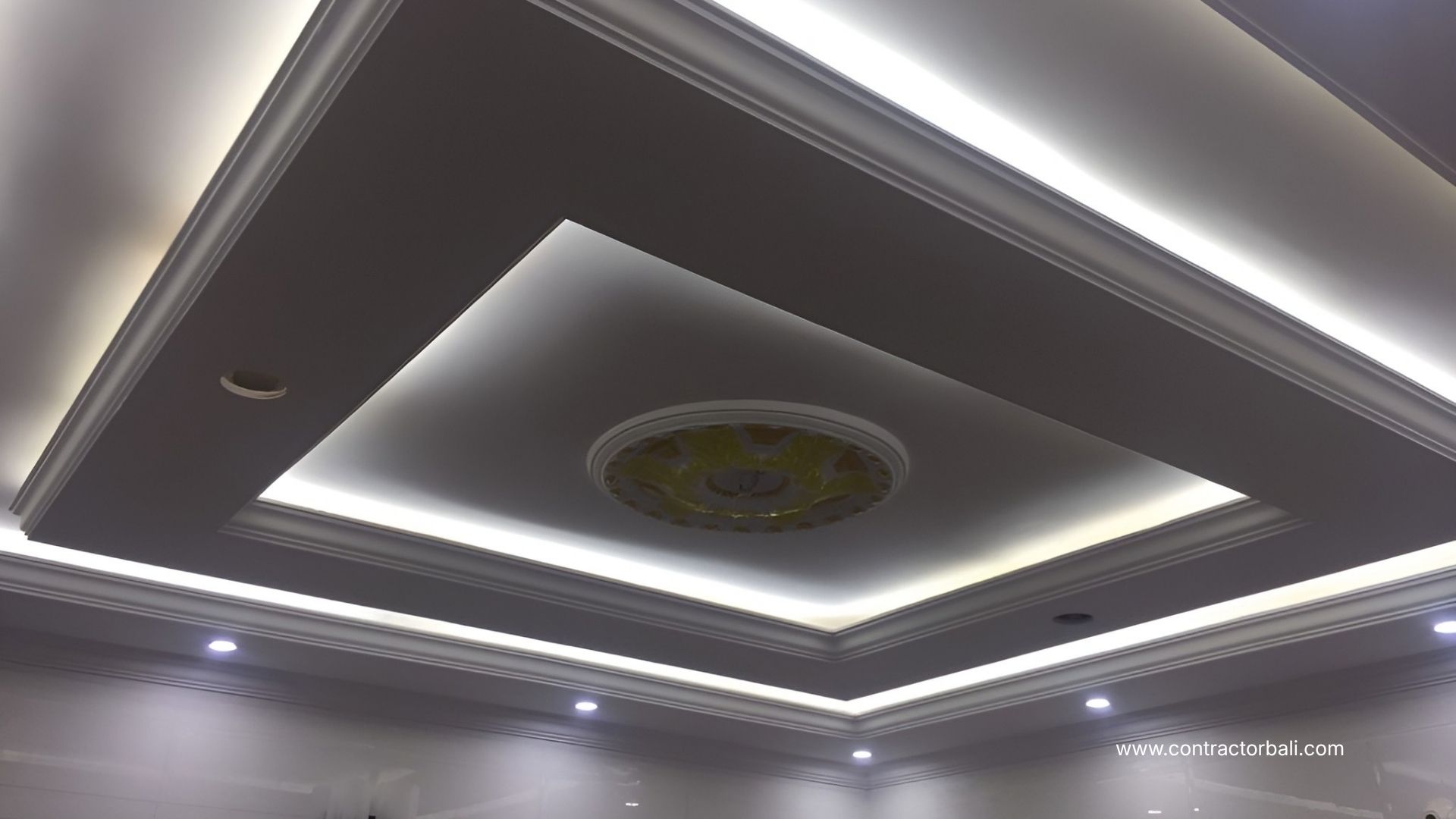
Advantages | Disadvantages |
|---|---|
+ Very smooth and neat surface + Easy to shape (suspended ceilings, modern designs) + Relatively quick to install + Reasonably priced | – Not waterproof → prone to damage if it leaks – May develop mold in damp areas – Not very impact-resistant |
2. Plywood
Plywood ceilings are a type of ceiling material made from plywood, which consists of several thin layers of wood veneer bonded together under high pressure. These plywood ceilings come in various thicknesses ranging from 3 mm to 6 mm. This type of ceiling is widely used because it is relatively inexpensive and easy to install.
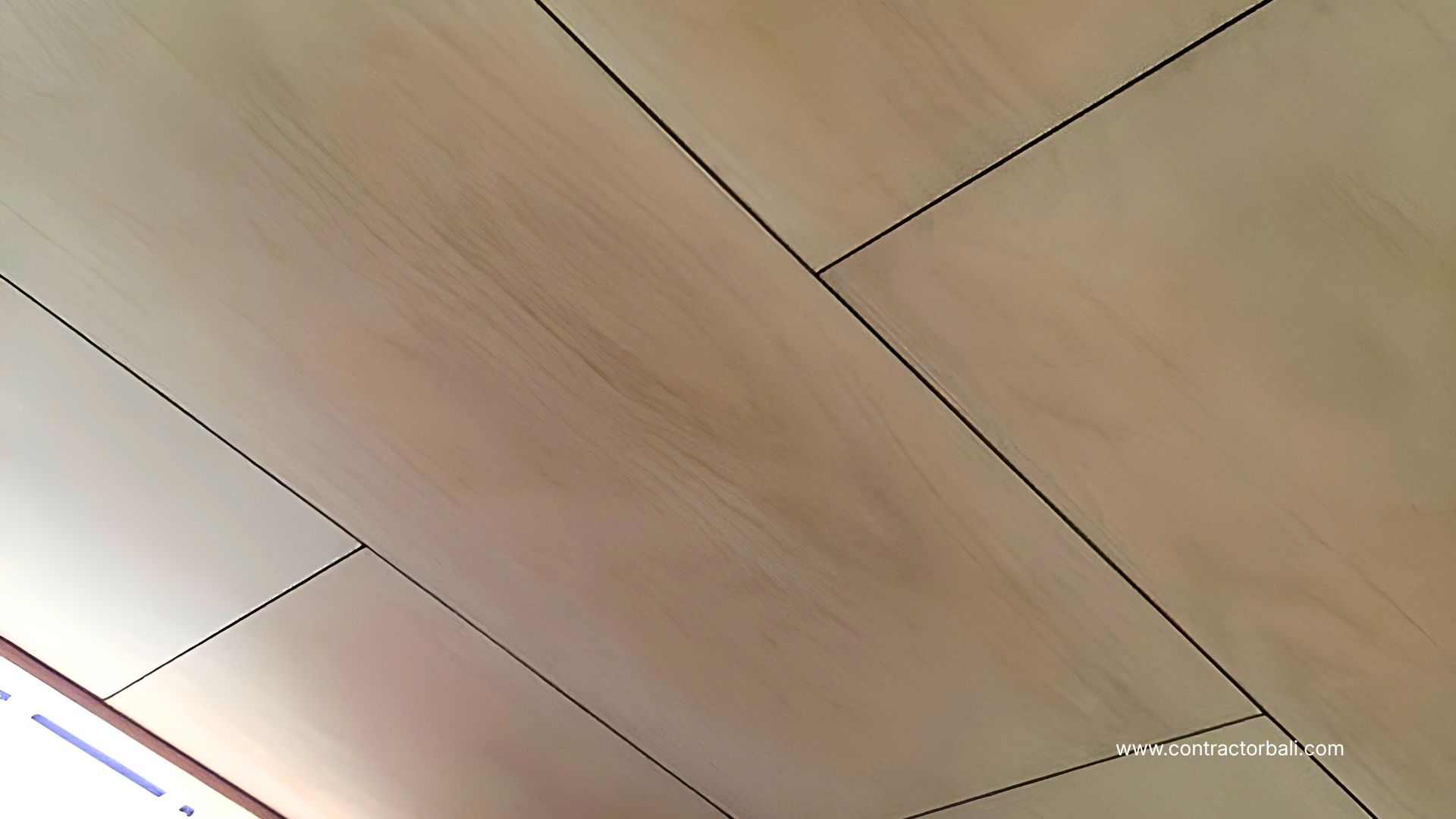
Advantages | Disadvantages |
|---|---|
+ Lightweight and easy to install + More affordable + Easy to shape | – Susceptible to termites – Not moisture-resistant → may warp – Relatively short service life |
3. Solid Wood
Solid wood ceilings are made from whole wooden planks that have been kiln dried or sun dried to reduce the moisture content in the wood, ensuring that the ceiling does not warp during installation.
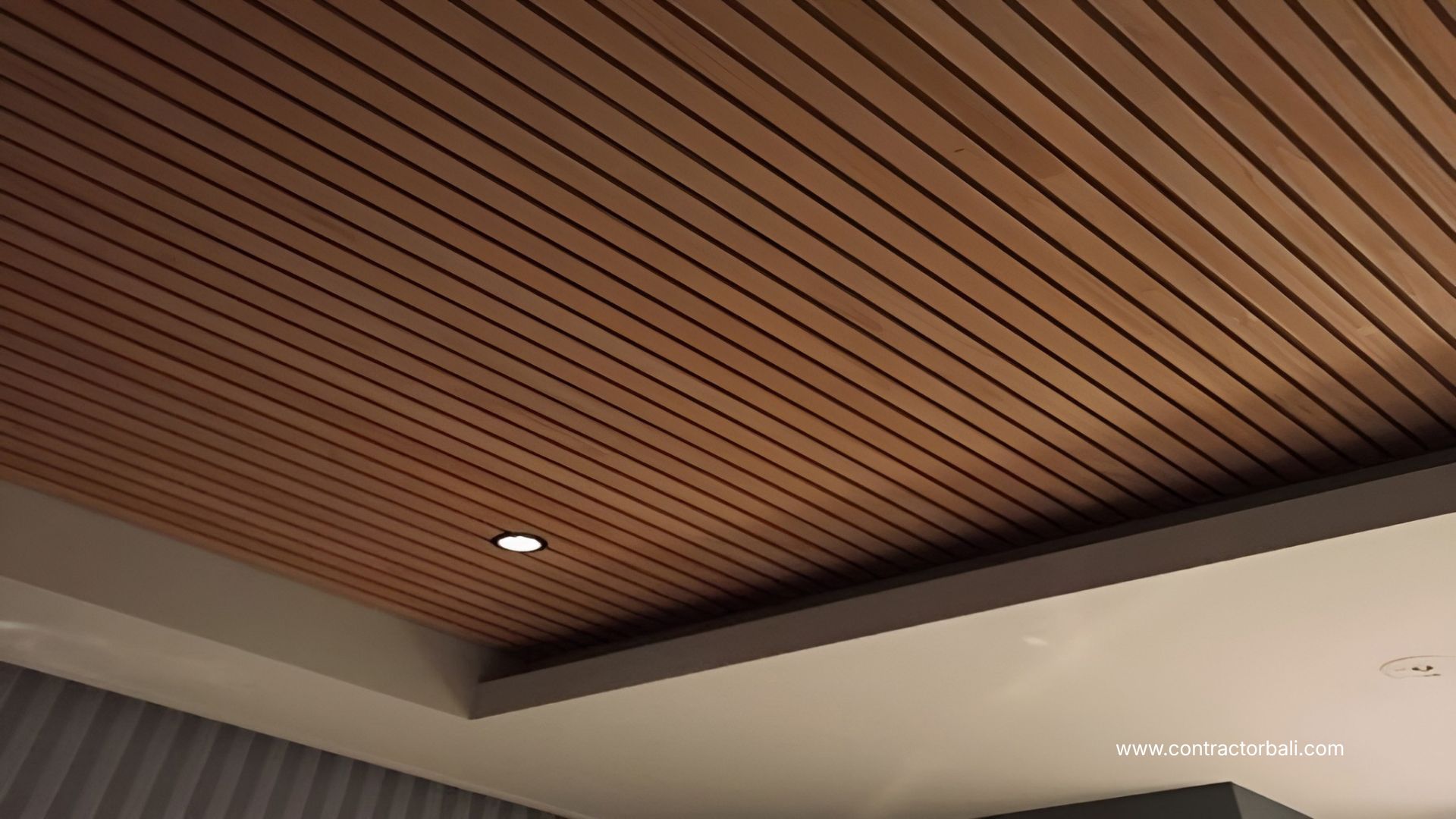
Advantages | Disadvantages |
|---|---|
+ Natural and luxurious appearance + Strong and durable (if properly maintained) + High aesthetic value | – Expensive wood – Requires regular maintenance – Susceptible to termites and moisture |
4. PVC (Polyvinyl Chloride)
PVC ceiling panels are a type of ceiling material made from polyvinyl chloride, a synthetic plastic polymer. PVC is formed through the polymerization of vinyl chloride and is known for its high strength, light weight, and resistance to moisture.
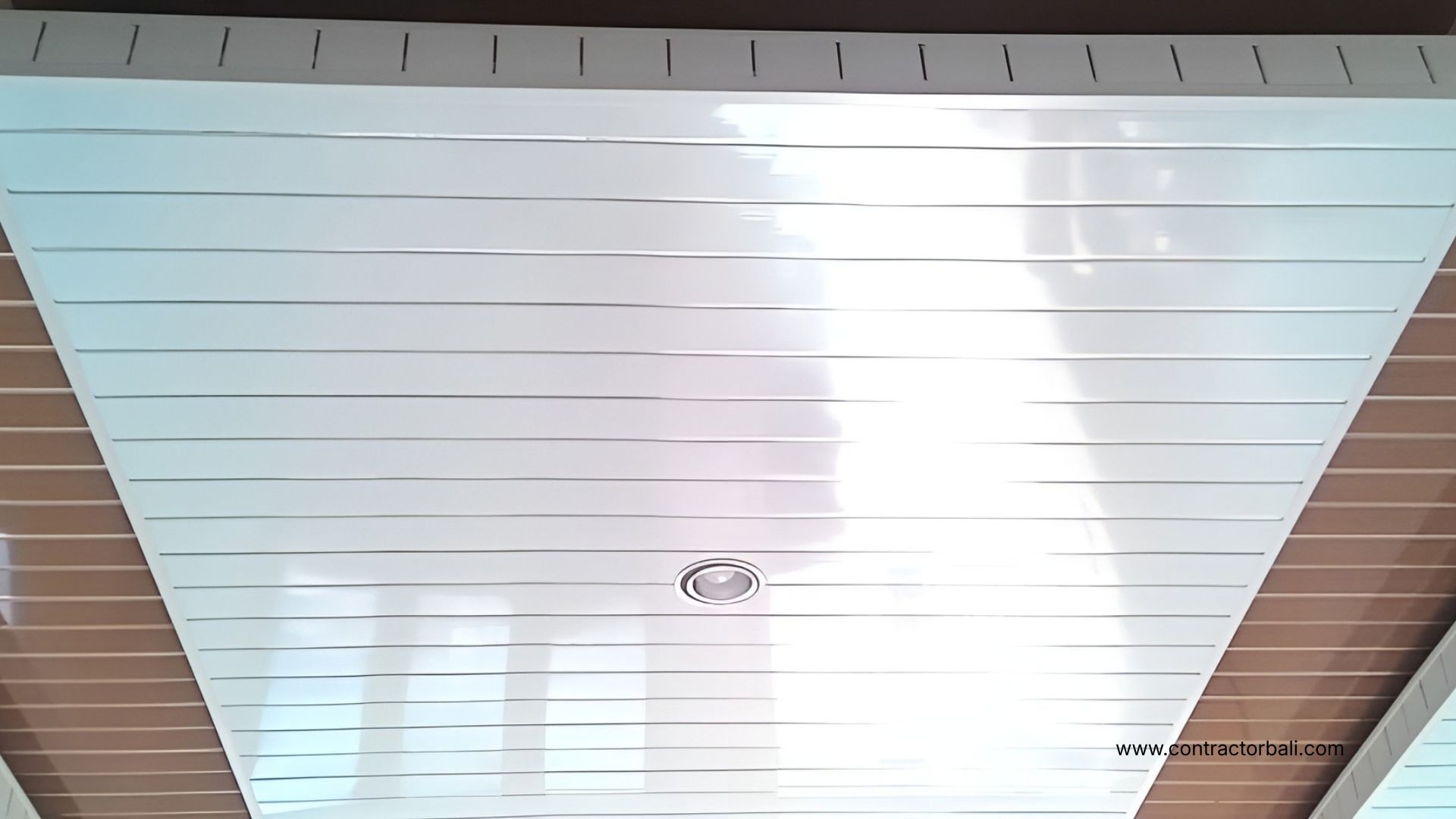
Advantages | Disadvantages |
|---|---|
+ Waterproof & termite resistant + Mold resistant + Lightweight and easy to clean + Wide variety of patterns (wood, marble, etc.) | – It’s more expensive than gypsum – It can sometimes look like “plastic” – It isn’t very heat-resistant (it can warp under extreme heat) |
5. GRC (Glassfiber Reinforced Cement)
GRC ceilings are a type of ceiling made primarily from a mixture of glass fiber and concrete, which gives this type of ceiling excellent long-term durability.
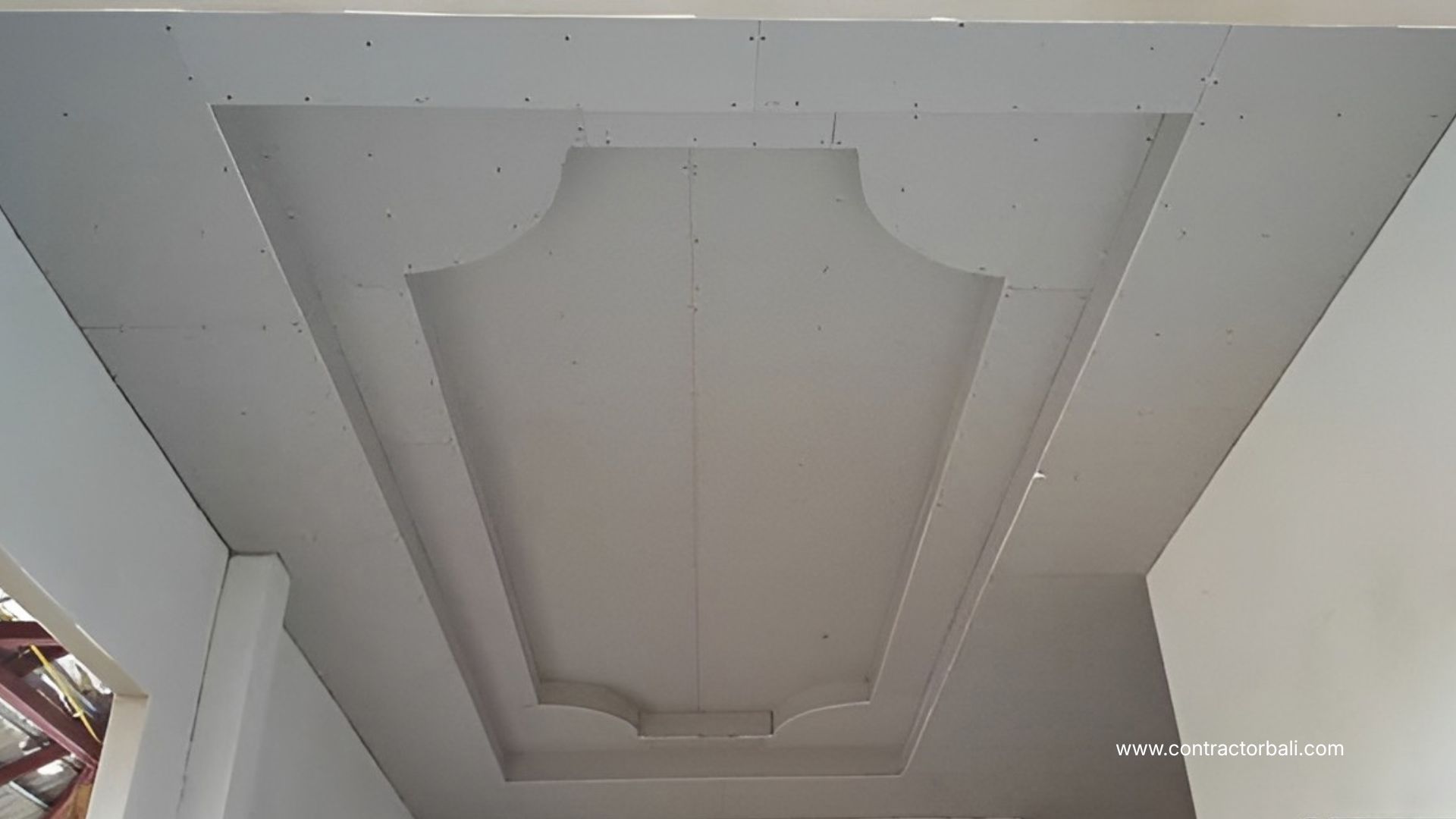
Advantages | Disadvantages |
|---|---|
+ More water resistant than gypsum + Strong and resistant to cracking + Suitable for semi outdoor areas | – Seams are visible if the installation isn’t neat – Needs additional finishing (putty and paint) – Heavier than gypsum |
6. Cement Fiber (Kalsiboard / Modern Eternit)
Fiber cement (calciboard) ceiling panels are a building material made from a mixture of cement, cellulose fibers, and silica sand. This type of ceiling panel is water-resistant, fire-resistant, and termite resistant.
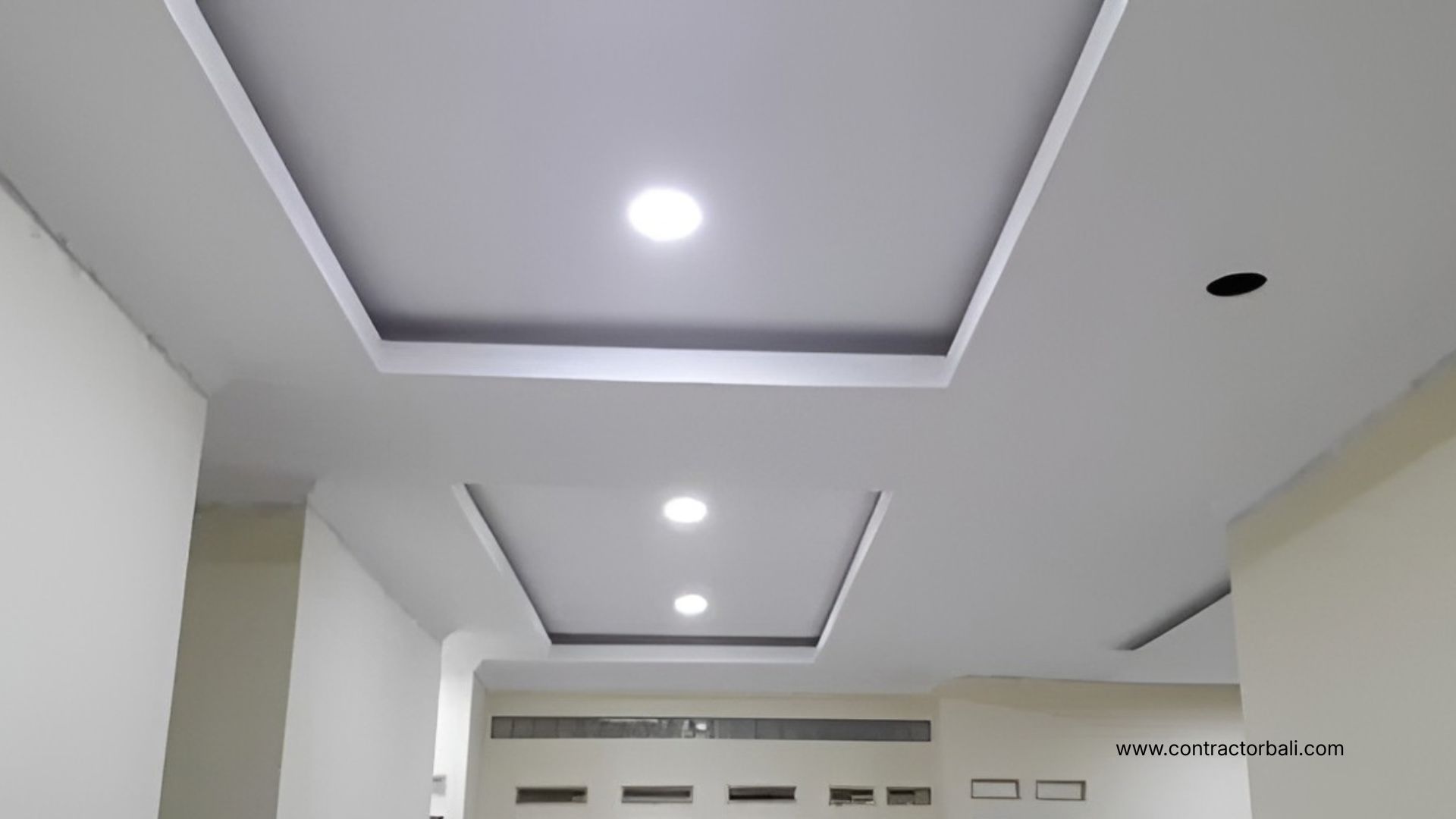
Advantages | Disadvantages |
|---|---|
+ Moisture and water resistant + Termite resistant + More durable than plywood | – It can still be damaged if there is a severe leak – It must be installed properly to prevent cracking |
7. Woven (Bamboo / Rattan)
Woven ceilings are typically made from bamboo. The material is thinned so it can be woven into the desired pattern for use as a ceiling rattan is also sometimes used. Woven ceilings are ideal for rural homes or homes with a traditional or tropical design.
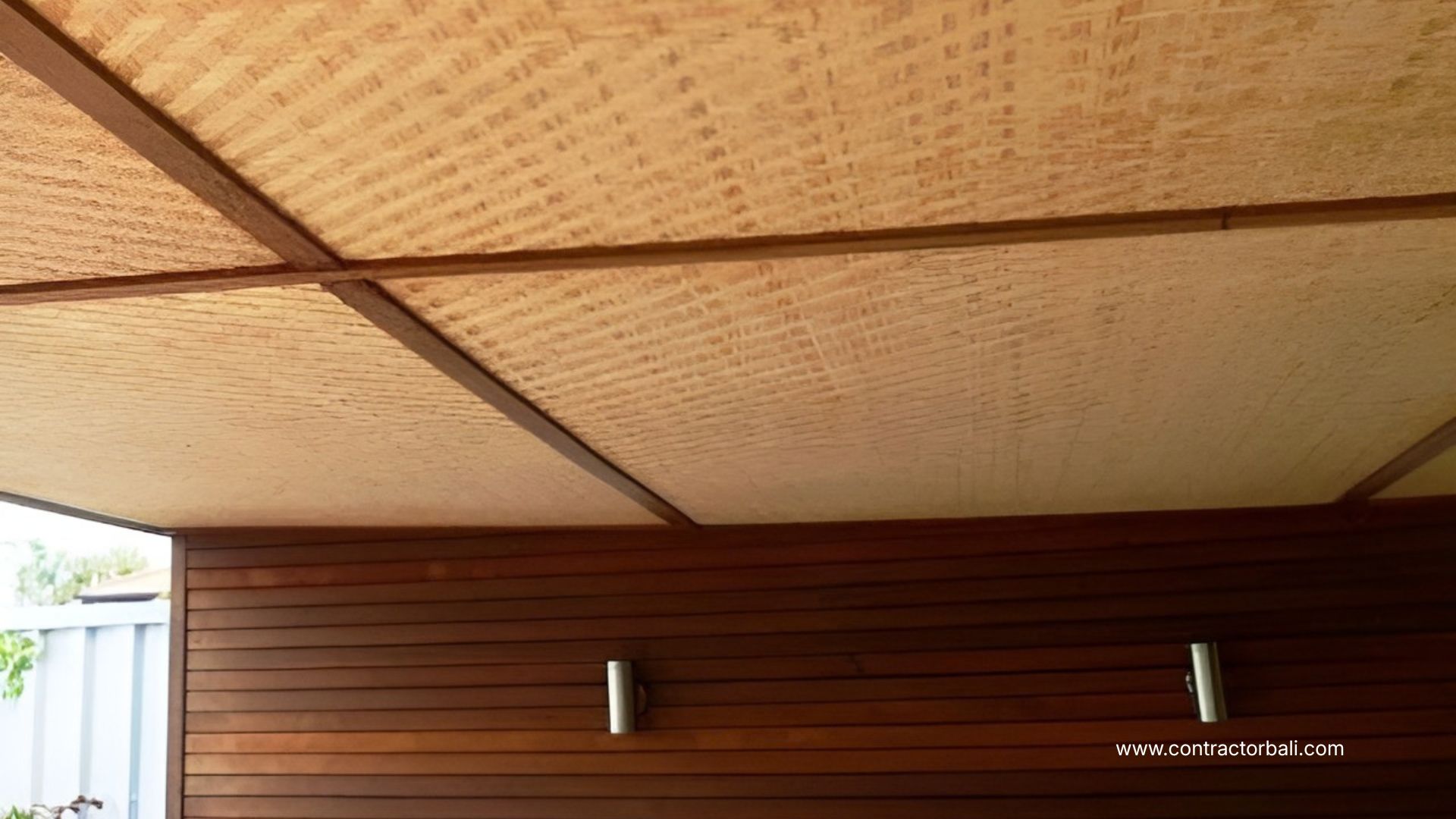
Advantages | Disadvantages |
|---|---|
+ Unique and natural aesthetics + Environmentally friendly + Good air circulation | – Does not last long – Susceptible to termites and mold – Requires careful maintenance |
Summary Table of Credit Limits
Material | Water Resistance | Price | Aesthetics | Durability |
|---|---|---|---|---|
Gypsum | ❌ | 💰 | ⭐⭐⭐⭐ | ⭐⭐⭐ |
PVC | ✅ | 💰💰 | ⭐⭐⭐⭐ | ⭐⭐⭐⭐ |
GRC | ✅ | 💰💰 | ⭐⭐⭐ | ⭐⭐⭐⭐ |
Plywood | ❌ | 💰 | ⭐⭐ | ⭐⭐ |
Solid Wood | ❌ | 💰💰💰 | ⭐⭐⭐⭐⭐ | ⭐⭐⭐ |
Cement Fiber | ✅ | 💰💰 | ⭐⭐⭐ | ⭐⭐⭐⭐ |
Woven bamboo | ❌ | 💰 | ⭐⭐⭐⭐ | ⭐⭐ |
Recommendations Based on Needs
- Standard home (affordable & neat) : Gypsum
- Damp areas / bathrooms / kitchens : PVC or GRC
- Durable & low-maintenance : PVC / fiber cement
- Luxury design : Wood
- Tropical concept : Bamboo / combination of louvered panels + high ceilings
Ceiling selection depends on :
- Budget 💰
- Location (humid or not)
- Home design 🎨