

ARTICLE
Don’t underestimate concrete curing the consequences can be disastrous!
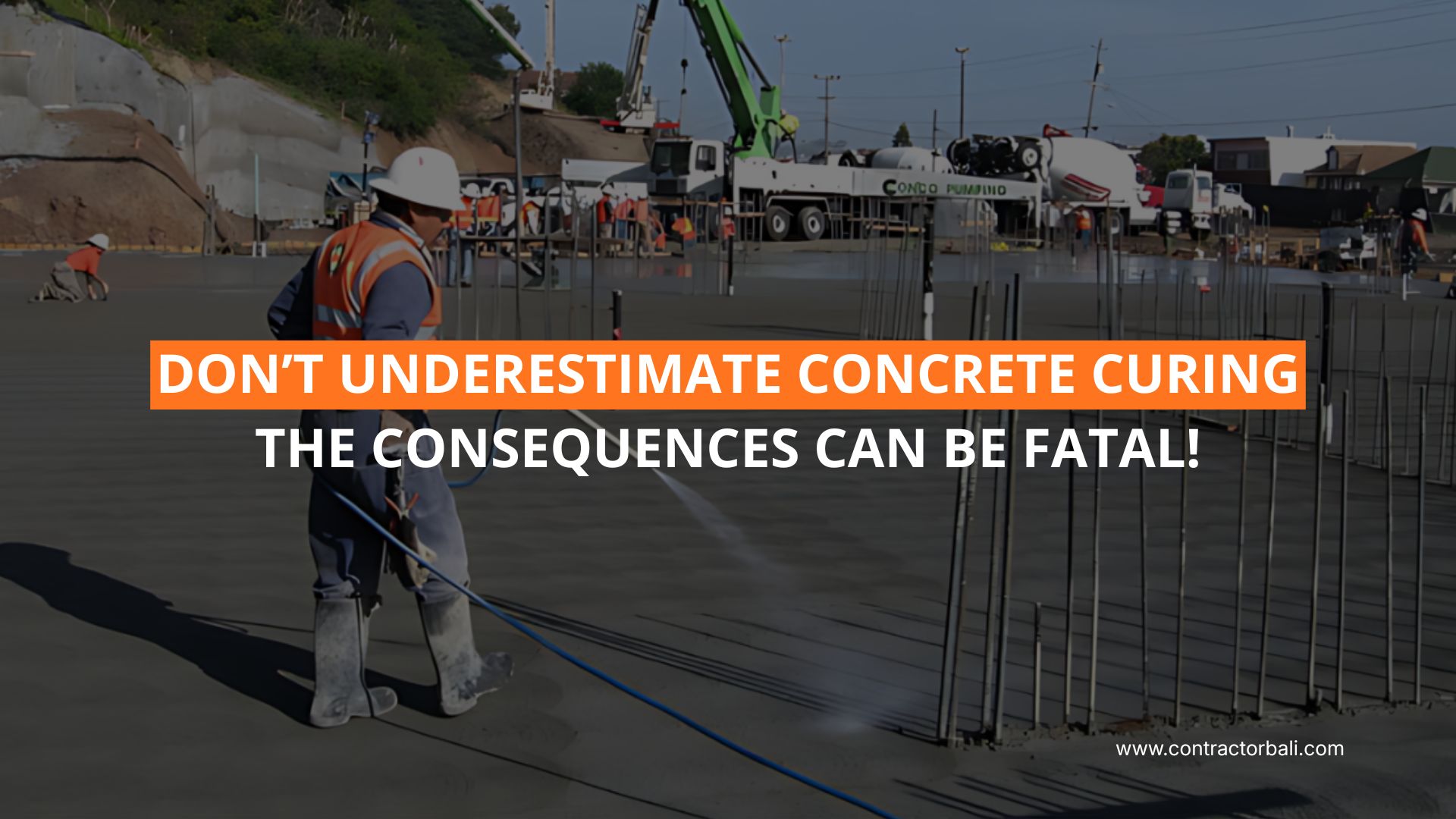
The concrete curing process is the stage that follows concrete placement, designed to maintain the concrete’s moisture and temperature so that it does not crack during the drying/hardening process.
This step is very important because the concrete drying process involves a chemical reaction between cement and water known as hydration. If the concrete is not cured, it dries too quickly and cracks easily, resulting in poor-quality concrete with very low compressive strength.
How long does it take for concrete to cure?
Concrete curing typically takes at least 7 days to achieve initial strength. For very high quality concrete structures, the ideal curing period is 28 days to achieve 99% of the concrete’s ultimate strength.
What happens if you don't cure concrete?
Concrete is prone to cracking and has low compressive strength. Because concrete dries quickly and a large amount of water evaporates, the chemical reaction between the cement and water cannot reach its full potential. Therefore, the concrete curing process is very important to ensure that the concrete remains hydrated and retains its moisture.
What is the purpose of concrete curing?
Its purpose is to maintain moisture and ensure that the concrete remains hydrated during the curing process. This is done to prevent the concrete from cracking.
How many types of concrete curing are there?
There are four types of concrete curing: curing with water, membranes, steam, and chemical solutions. Here’s an explanation!
Recent Posts
1. Curing Concrete with Water
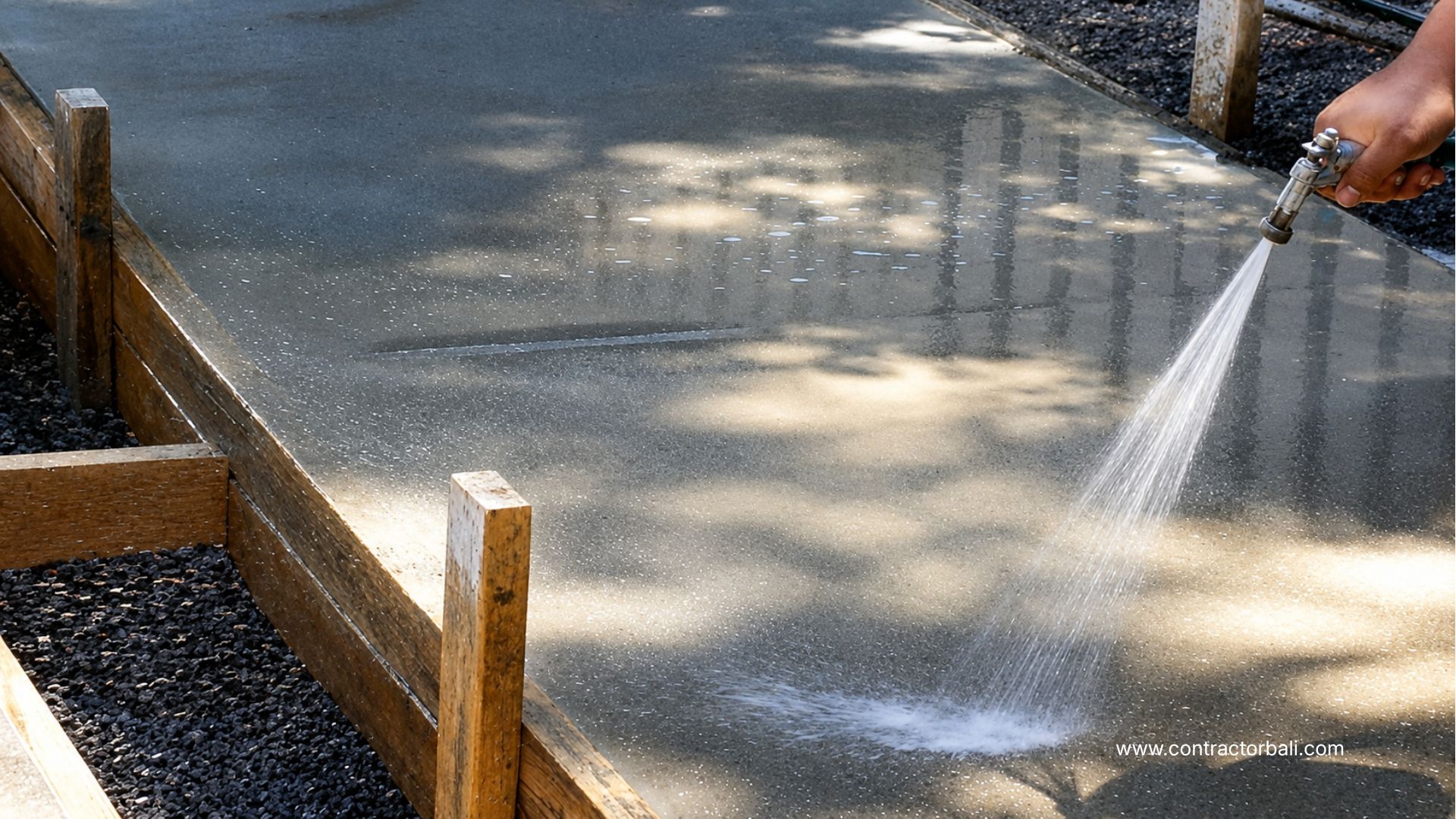
Water curing is a common method typically used in every project. Its purpose is to keep the concrete surface moist with water (by sprinkling, soaking, or covering the concrete surface with wet burlap sacks). This method is carried out during the concrete curing process to prevent the concrete from drying out too quickly, ensuring that the resulting concrete is strong.
3. Steam Curing of Concrete
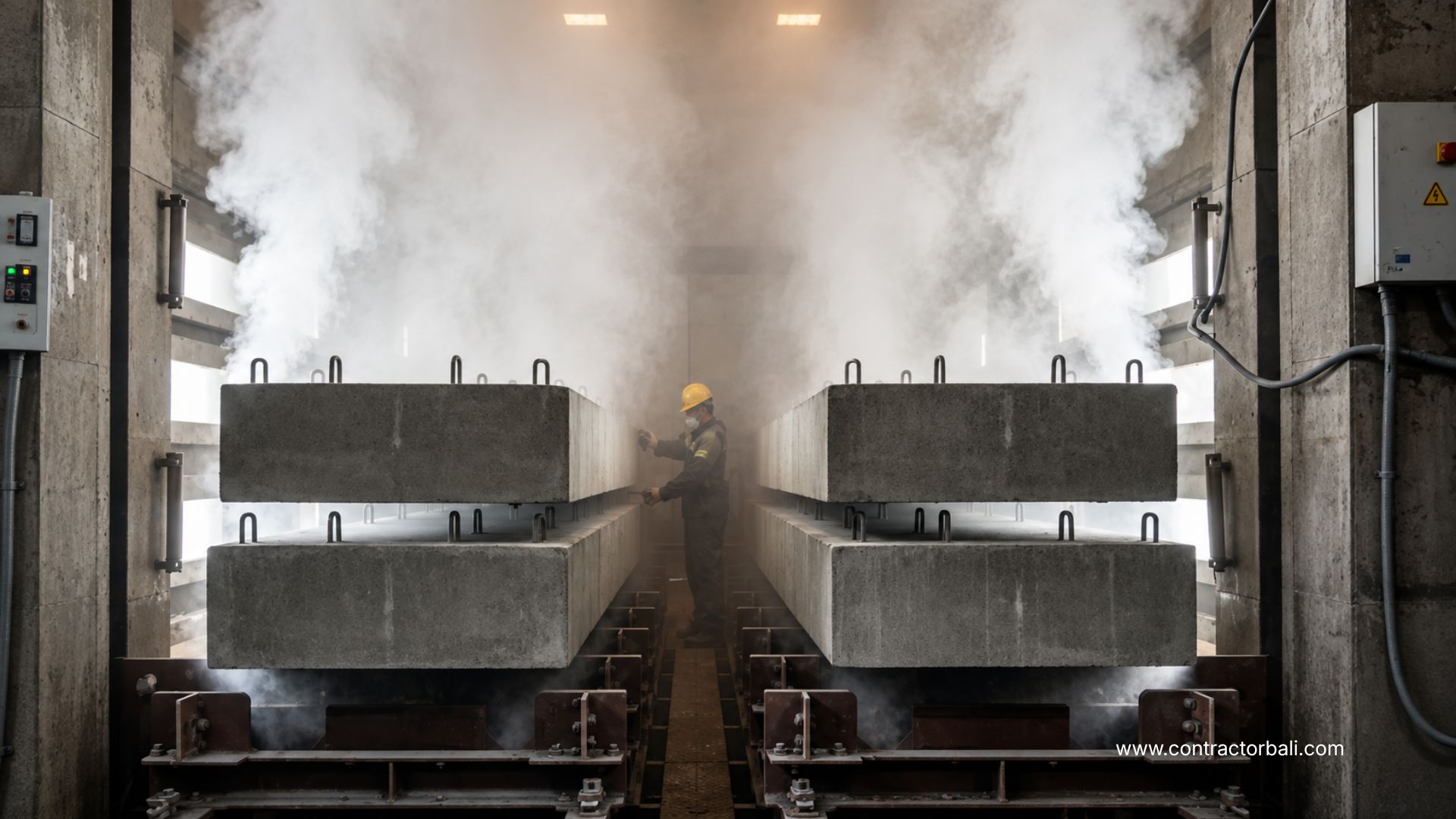
This steam curing method for concrete is typically used for concrete produced in a plant (precast concrete). This type of concrete is commonly used for infrastructure projects and other construction projects. The steam curing process takes place in a specialized chamber designed to maintain the concrete’s temperature and humidity, ensuring high quality results.
2. Curing Concrete with a Membrane
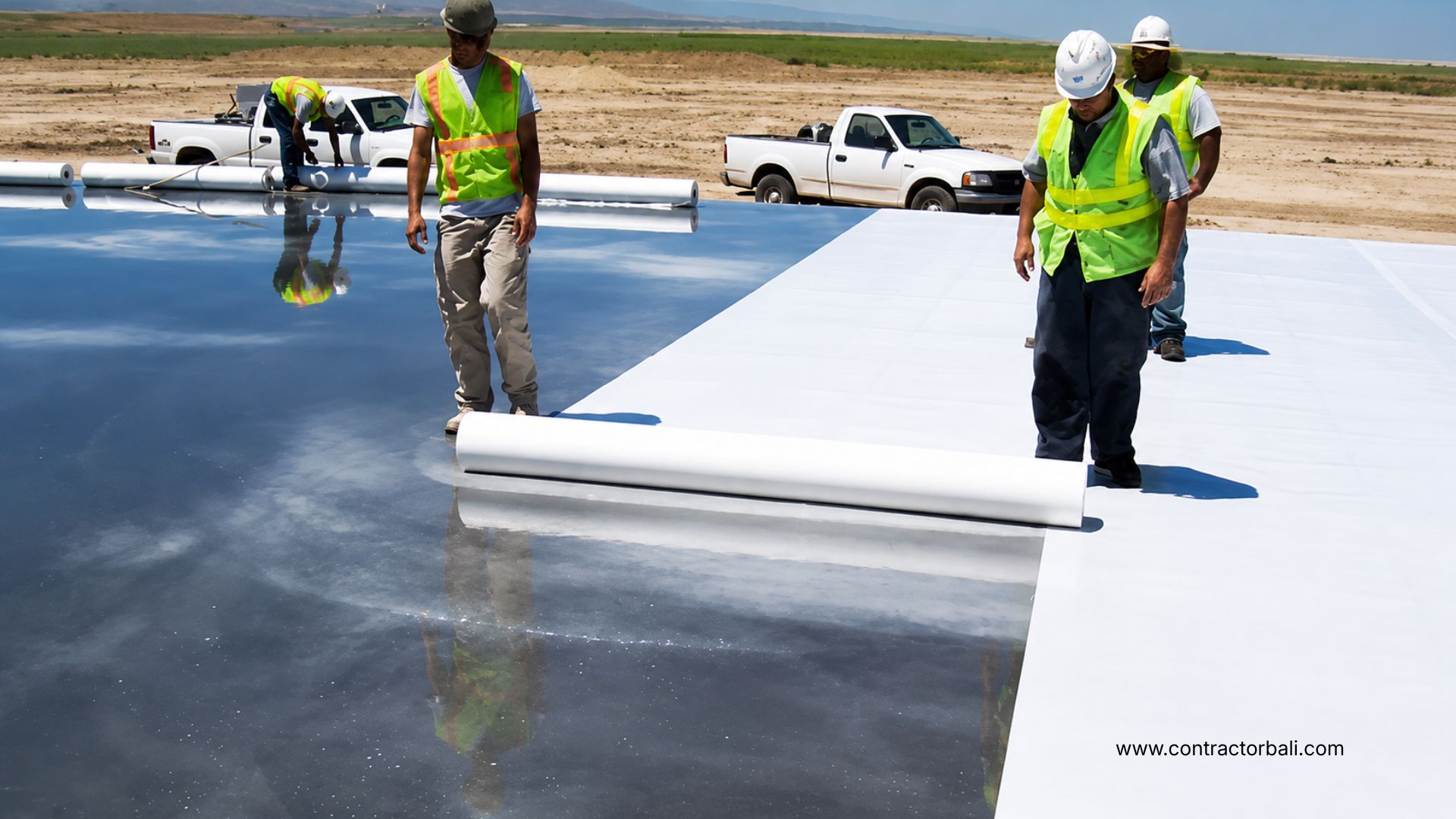
The membrane curing method is typically used in areas with limited water supplies. It involves adding a protective layer (membrane) over the concrete to prevent excessive evaporation.
4. Curing concrete with a chemical solution
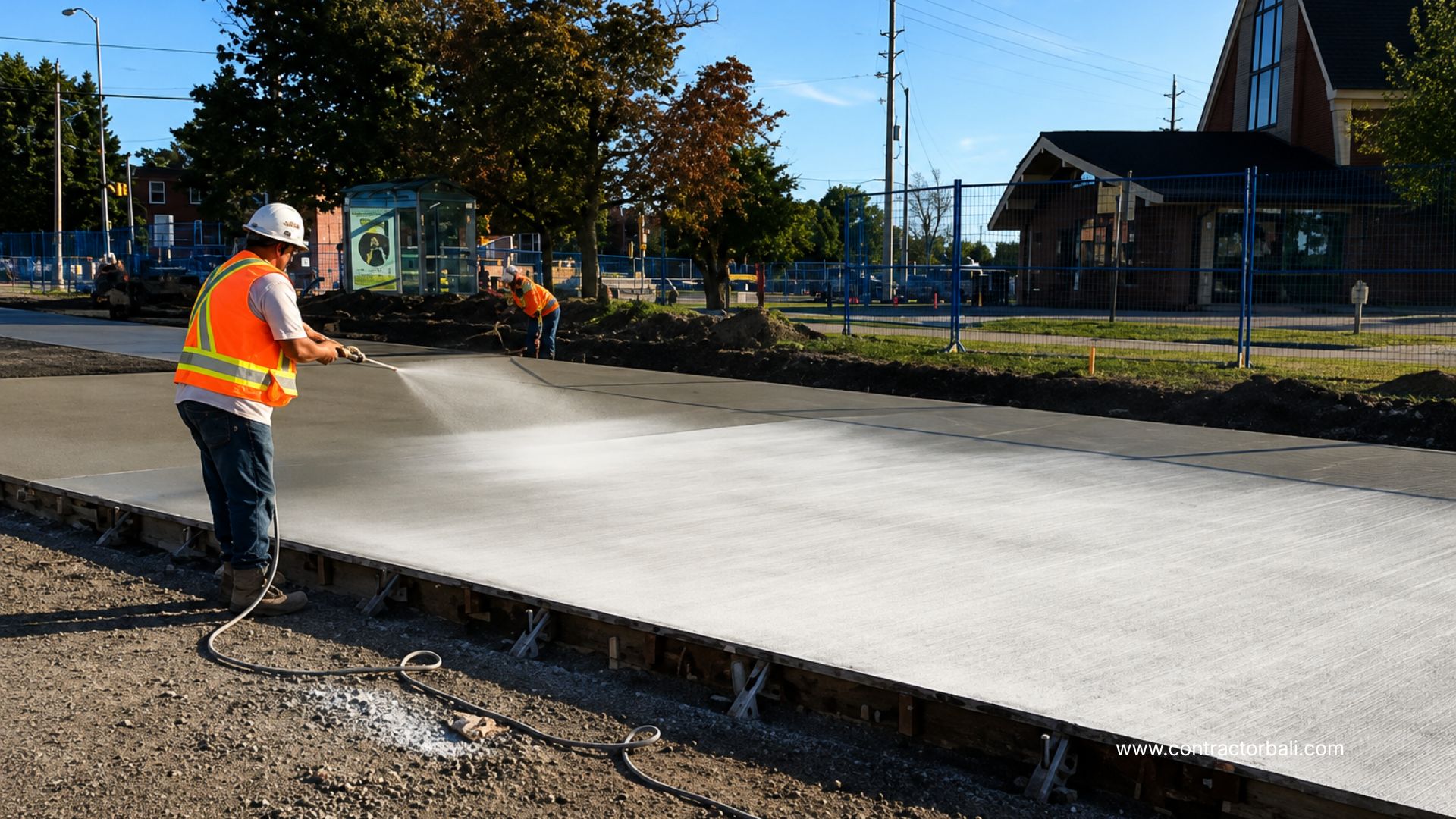
Curing Compound is a method of curing concrete using a chemical solution. It is a practical method that does not require continuous watering to maintain moisture during the concrete curing process.
Benefits of Concrete Curing | Problems with Concrete That Doesn’t Cure |
|---|---|
+ Increases concrete strength + Prevents cracking + More weather-resistant + Reduces shrinkage + Resistant to erosion | – Concrete is not strong – Prone to cracking – Not weather-resistant – Prone to erosion |
In conclusion:
Concrete produced through the curing process is stronger, less prone to cracking, and weather-resistant. In contrast, concrete that does not undergo the curing process cracks very easily, is not weather-resistant, and has lower strength than concrete that has undergone the curing process.