

ARTICLE
Plamir is the key to smoother walls, check out the explanation!
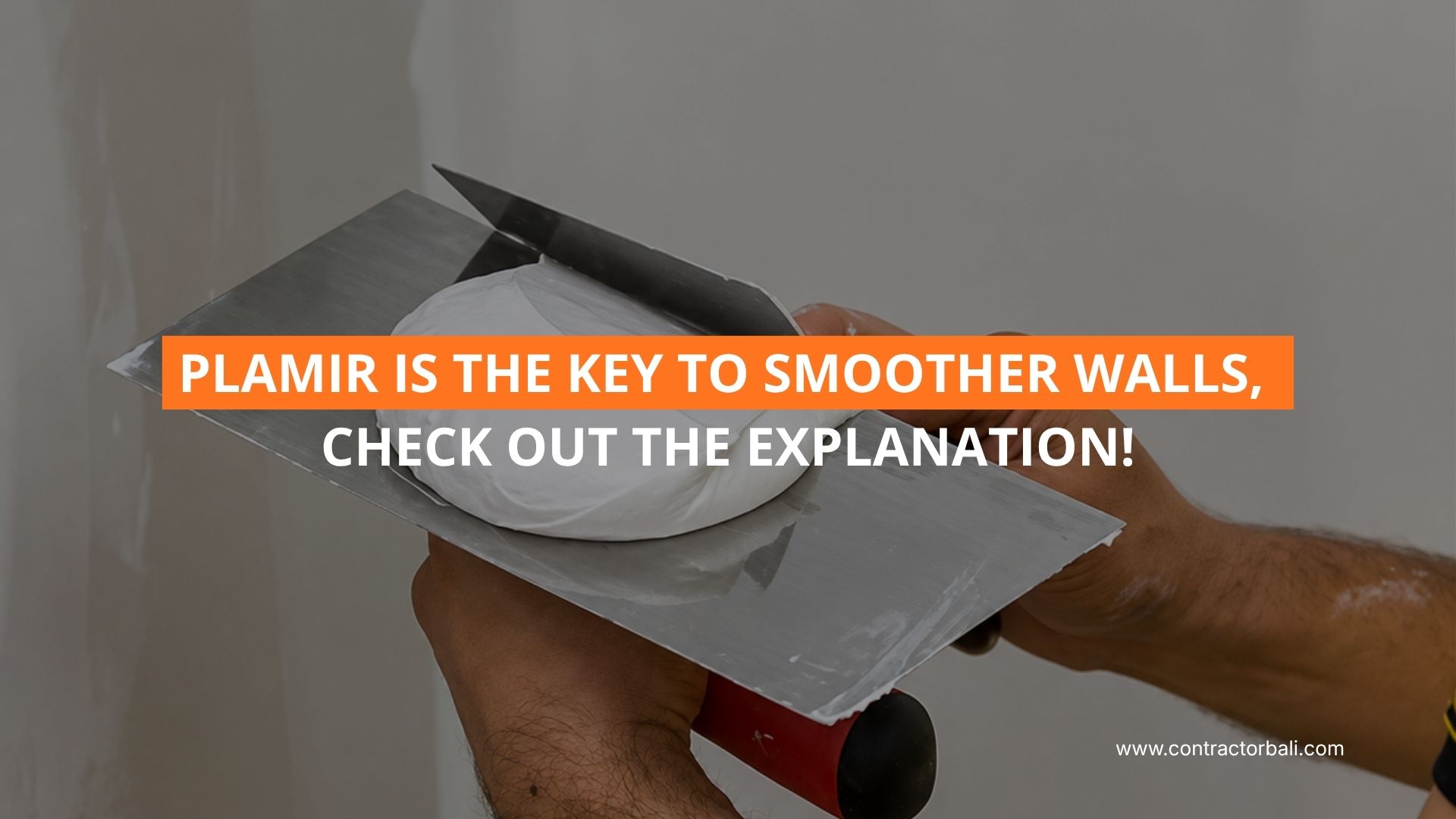
Plamir is a fine material used to level and smooth wall surfaces before the final coat of paint is applied.
This material is often referred to as wall putty, which serves as a finishing coat to make walls smoother and more even, so that the painted surface looks neater and smoother. Putty is composed of “white cement, calcium carbonate, and adhesive”; a small amount of water must be added when applying it. Modern putty now incorporates additives such as acrylic or polymers.
When is Plamir necessary?
It is used to coat wall surfaces that have already been plastered; its purpose is to smooth the surface, fill holes, and cover hairline cracks in the walls so that the wall surface appears neat and smooth during the painting process.
What are the different types of plamir?
There are three types of plamir, here is an explanation of each:
1. Cement Plamir
Made from cement, fine sand, and additives to improve adhesion and workability. It has a coarse texture and is used to fill large holes and cracks in walls. It has strong adhesion but is not very water-resistant unless coated with waterproof paint.
2. Gypsum Plamir
Made from gypsum, a finer material than cement. It has a softer texture and is easy to apply, resulting in a smoother surface. Its water resistance is lower than that of cement plaster, but it adheres well to clean surfaces.
3. Acrylic Plamir
Made from an acrylic polymer base, this plamir has excellent adhesion, is water-resistant, and is easy to apply. It has a smooth texture and produces a very even surface. It tends to be more expensive than other types.
Main Functions of Plamir |
|---|
1. Leveling the Wall Surface – Closing the tiny pores in the wall – Filling fine cracks or small holes – Making the wall completely flat |
2. Smoothing Walls Without spackle: – The wall surface feels rough With spackle: – The wall becomes as smooth as the surface of a piece of paper |
3. Maximizing Paint Results Primer helps: – Ensure more even paint coverage – Improve paint adhesion – Reduce streaks or patchiness |
4. Saves Paint Since the surface is already smooth: – The paint isn’t absorbed much into the pores – Paint usage is more efficient |
5. Covers Wall Imperfections Such as: – Nail holes – Hairline cracks – Waves that bounce off the wall |
In conclusion:
Choosing the right type of spackle is essential to ensuring a smooth, even, and long lasting finish. Be sure to select a spackle that meets the needs of your project.